

Could you produce 12 months of loan officer advertising in 48 hours?
If a state examiner asked for it today, most independent mortgage banks could not answer immediately. This checklist shows you where your supervisory gaps are, before an examiner finds them for you.
“Provide all advertising created by loan officers in the past 12 months, and evidence of supervisory review.” That request is standard in state examinations now, and examiners are giving less notice and expecting faster turnaround. How quickly you can respond says more about your advertising compliance program than any policy document on file.
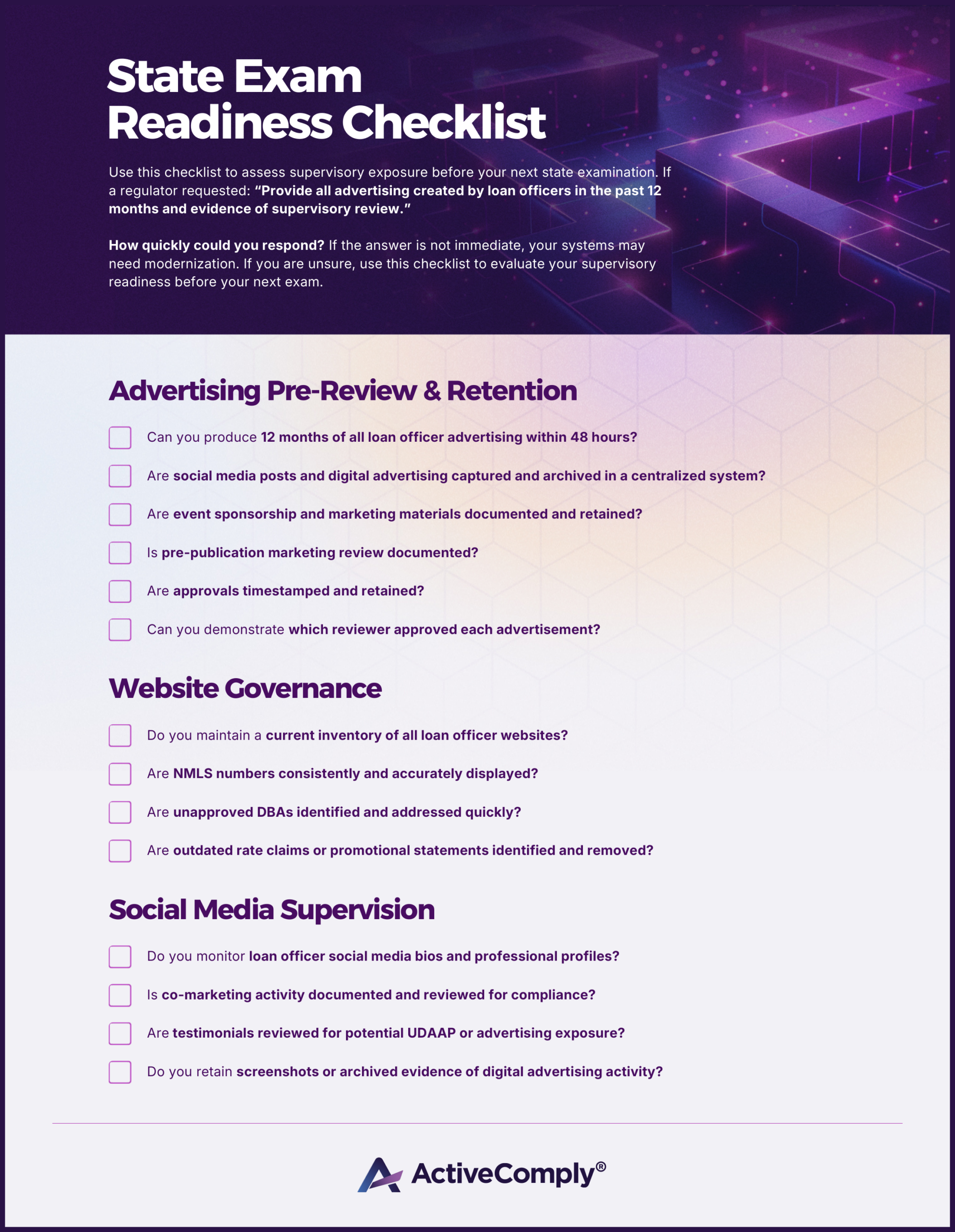
The State Exam Readiness Checklist walks through 22 questions across five areas of supervisory exposure: advertising pre-review and retention, website governance, social media supervision, remediation and issue tracking, and multistate oversight controls. Answer them honestly, and you will know exactly where your program stands before your next exam does.
Know where you stand before your next exam
Download the State Exam Readiness Checklist and score your program in minutes.
What’s inside?
Advertising pre-review and retention. Whether you can produce 12 months of loan officer advertising within 48 hours, and prove which reviewer approved each piece.
Website governance. Whether NMLS numbers, DBAs, and rate claims are accurate and current across every loan officer website your institution is responsible for.
Social media supervision. Whether loan officer bios, co-marketing activity, and testimonials are documented and reviewed for advertising exposure.
Remediation and issue tracking. Whether violations are logged, corrected, and tracked by loan officer or marketing source, so patterns get addressed before an examiner spots them.
Multistate oversight controls. Whether state-specific advertising and licensing requirements are tracked centrally as your loan officers expand into new markets.
Why it matters?
A state examination finding on advertising oversight is not a warning. It results in a documented deficiency, a required remediation timeline, and in repeat cases, referral for further enforcement action. The checklist includes a quick scoring guide, so you can see immediately whether your program reflects moderate readiness, elevated risk, or high exam vulnerability, and what to prioritize first.
Talk to our team about what your checklist score means for your next exam.