

2026 Social Media Scaries
Once again, as Spooky Season rolls around, here at ActiveComply we like to share with the world some findings from our Wall of Shame folder: real social media posts, profiles, and marketing pieces captured in our system that highlight the sometimes darker side of advertising in our regulated industry. This year’s folder had a little bit of everything. Findings range from RESPA Section 8 concerns, to fair lending red flags hiding in plain sight, to a certain fictional regional manager who somehow ended up on a lender’s team page. Take a peek, if you dare, at these frightening findings to ensure similar Social Media Scaries won’t haunt your institution!
A quick housekeeping note before we begin: as always, names and institutions have been redacted. The point of the Wall of Shame isn’t to shame anyone in particular. It’s to remind all of us that the things that end up on an exam report usually start as a post that seemed perfectly harmless at the time.
RESPA Violations
RESPA (the Real Estate Settlement Procedures Act) is the federal law established in 1975 to protect homebuyers from predatory lending practices. One main goal? Prohibiting kickbacks, referral fees, and other bribes between settlement service providers. This is primarily outlined in RESPA Section 8, where the CFPB’s definition of a Thing of Value is famously broad. If gifts are given or accepted as part of an agreement for the referral of business, they are strictly prohibited.
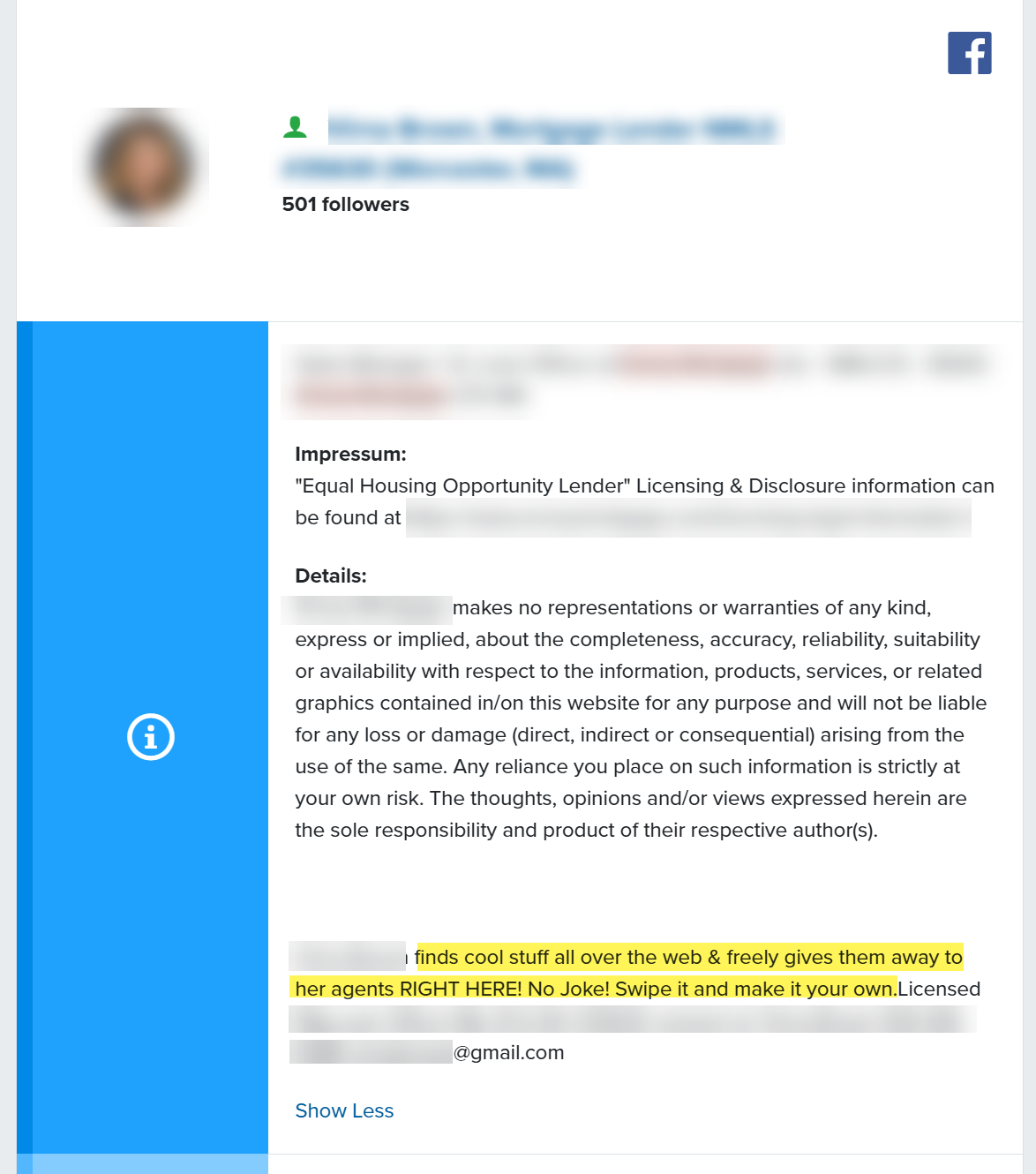
This year’s folder gave us two flavors of RESPA scaries. In the first example, a loan officer’s business profile proudly advertises that she “finds cool stuff all over the web” and freely gives it away to her agents. The invitation to “swipe it and make it your own” is aimed squarely at real estate agents, the exact referral sources RESPA is designed to protect against. Free marketing content handed exclusively to referral partners is a Thing of Value, no matter how small each individual item seems.
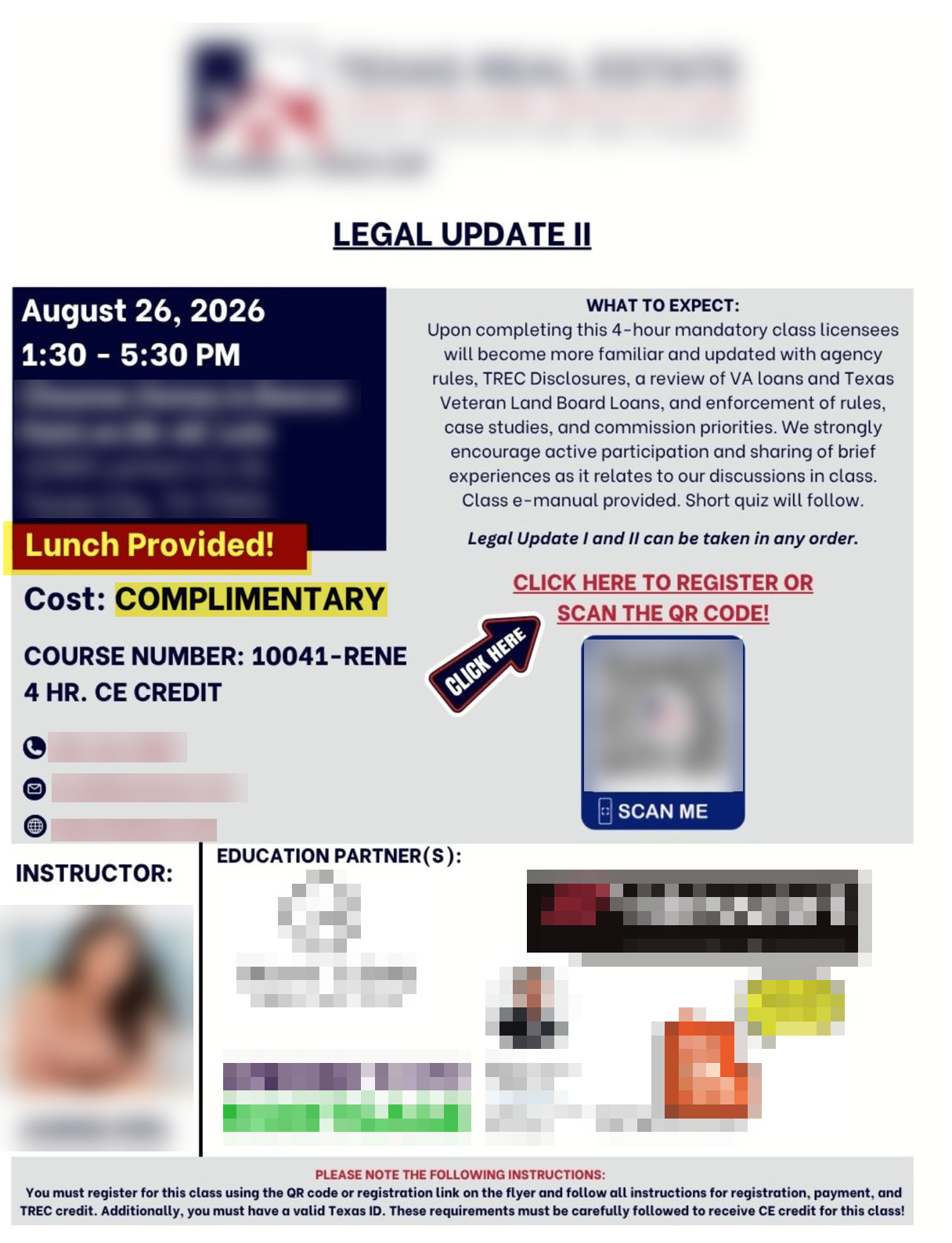
In the second example, a flyer for a complimentary, four-hour continuing education class for real estate licensees lists a loan officer and a title company as “education partners,” with lunch provided. Co-sponsoring agent CE with a title company is a long-standing area of regulatory scrutiny. Who paid for the venue? Who paid for lunch? Was the cost split proportionally, or is the lender quietly subsidizing a benefit for agents who send them business? And as a reminder, free CE that is a requirement for maintaining a license would be considered a defraying of costs under RESPA. A regulator seeing this flyer will ask every one of those questions, and “it was only sandwiches” is not a defense we recommend.
Fair Lending Issues
Fair lending concerns rarely show up on social media as an obvious statement of discrimination. They show up as values statements, taglines, and bios that seem heartfelt but signal, intentionally or not, who a lender prefers to work with. The FFIEC has been clear since 2013 that social media content is advertising, and advertising is subject to the Equal Credit Opportunity Act and the Fair Housing Act.
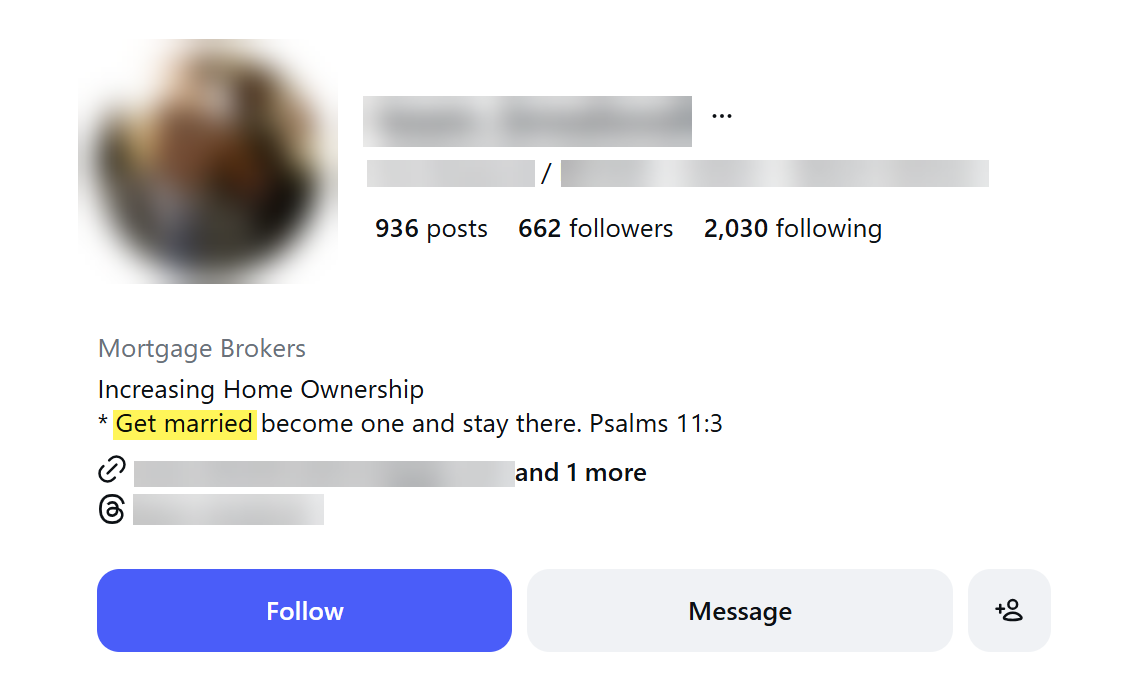
In the first example, a mortgage broker’s Instagram bio reads “Increasing Home Ownership” immediately followed by advice to “get married, become one, and stay there,” complete with a scripture citation. Marital status and religion are both protected classes under ECOA. When a consumer who is single, divorced, or of a different faith reads that bio, they may have reason to wonder whether this broker will treat their application fairly. A regulator reading it will wonder the same thing.
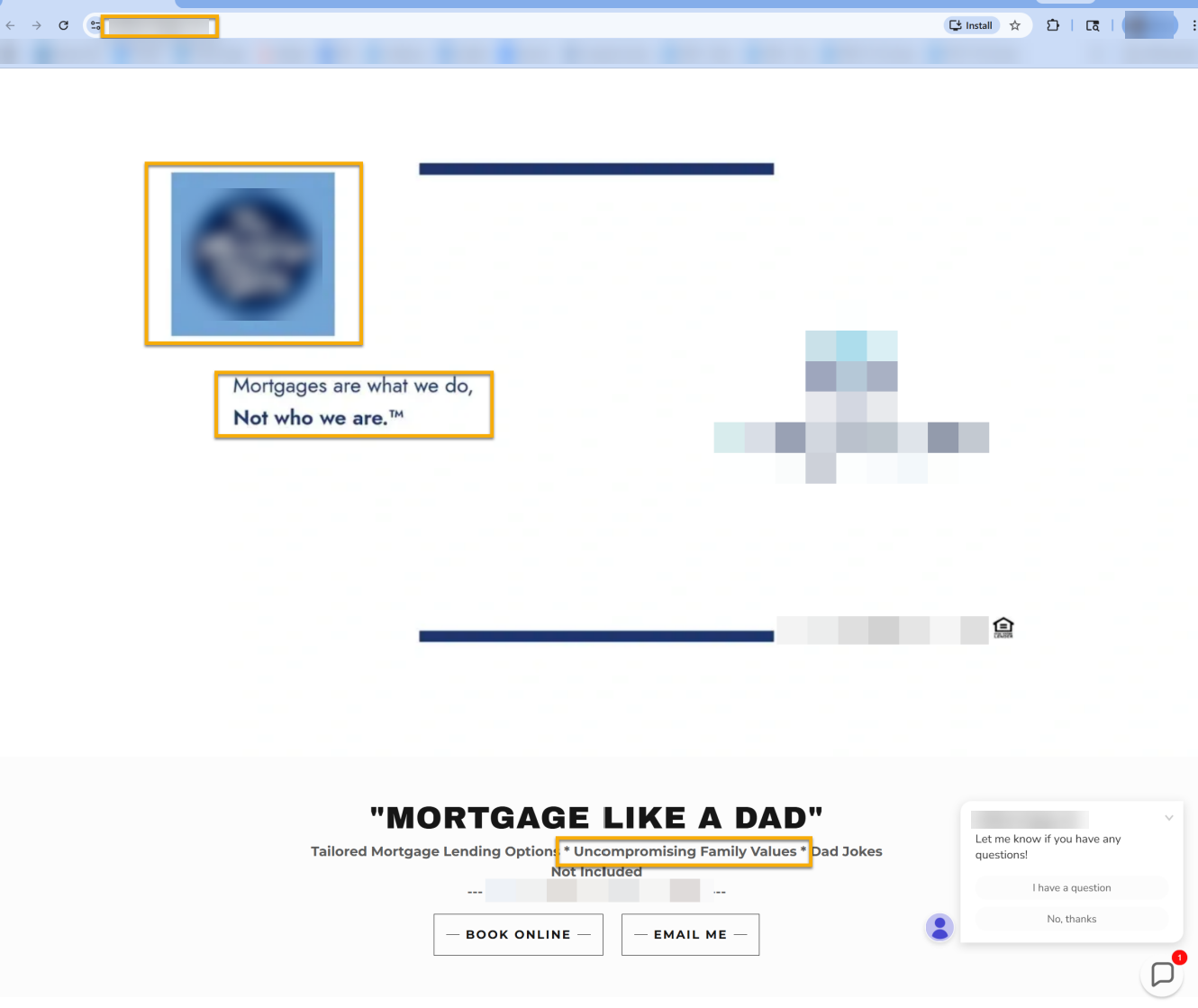
In the second example, a loan officer’s standalone website promises “Uncompromising Family Values” as a core selling point, under a tagline about “mortgaging like a dad.” On its own, the phrase might read as harmless personality. Paired with an unregistered DBA, a domain that doesn’t match the licensed entity, and a page with almost no licensing or NMLS information, it becomes a fair lending question wrapped inside a licensing question. Which entity is actually offering these loans, and what exactly does “family values” mean for the borrower who doesn’t fit that picture?
UDAAP Red Flags
In this example is a UDAAP concern that we see constantly: a lender’s homepage leads with “Low Rates. Easy Applications. Quick Closings.” and promises clear-to-close in as little as 10 days. Low compared to what? Easy for whom? Claims like these are unfair, deceptive, or abusive when they can’t be substantiated, and “as little as 10 days” without any qualification sets an expectation most borrowers will never experience. Sales teams at times seem to love superlatives. Examiners love asking for the data behind them & citing for them on exams.

Don’t Be Another Social Media Horror Story
You don’t have to become another story in the news, nor reap the negative effects of an errant post, page, or flyer. There are steps you can take to avoid regulatory and other violations committed innocently, or not, through social media and digital marketing.
- Policy: Have clear policies and protocols in place to deal with infractions, and make sure your employees understand them. This includes clear positions on sticky topics like politics, religion, and world events, as well as on standalone websites and DBAs. Risk tolerance can vary by institution. Ensure your executive team agrees with where your institution draws the line.
- Training: Have employees participate in a social media and advertising training program at hire and at least annually. Spend real time on the quiet stuff: what counts as a Thing of Value, which taglines create fair lending exposure, and when a rate needs an APR next to it. Have employees sign an attestation acknowledging that they are aware of the company policy.
- Pre-Review: Build a workflow where marketing pieces, flyers, and co-sponsored events get a compliance look before they go out, not after a regulator finds them, where possible.
- Monitoring: Implement robust monitoring that can catch published problems before they end up on an exam report.
Think You’ve Seen the Scariest One?
We want to hear from you! Let us know which finding you think is the spookiest of all. Is it the complimentary CE lunch? The family values DBA? Or do you have your own spooky story to share?
And if you’d rather not wait until next October to find out what’s lurking on your own team’s pages, request a demo and we’ll help you take a look before an examiner does.
Until next time…
Catch up on previous years: 2024 Social Media Scaries and 2025 Social Media Scaries.