

Webinar: A Changing Tide for Enforcement Priorities in 2027
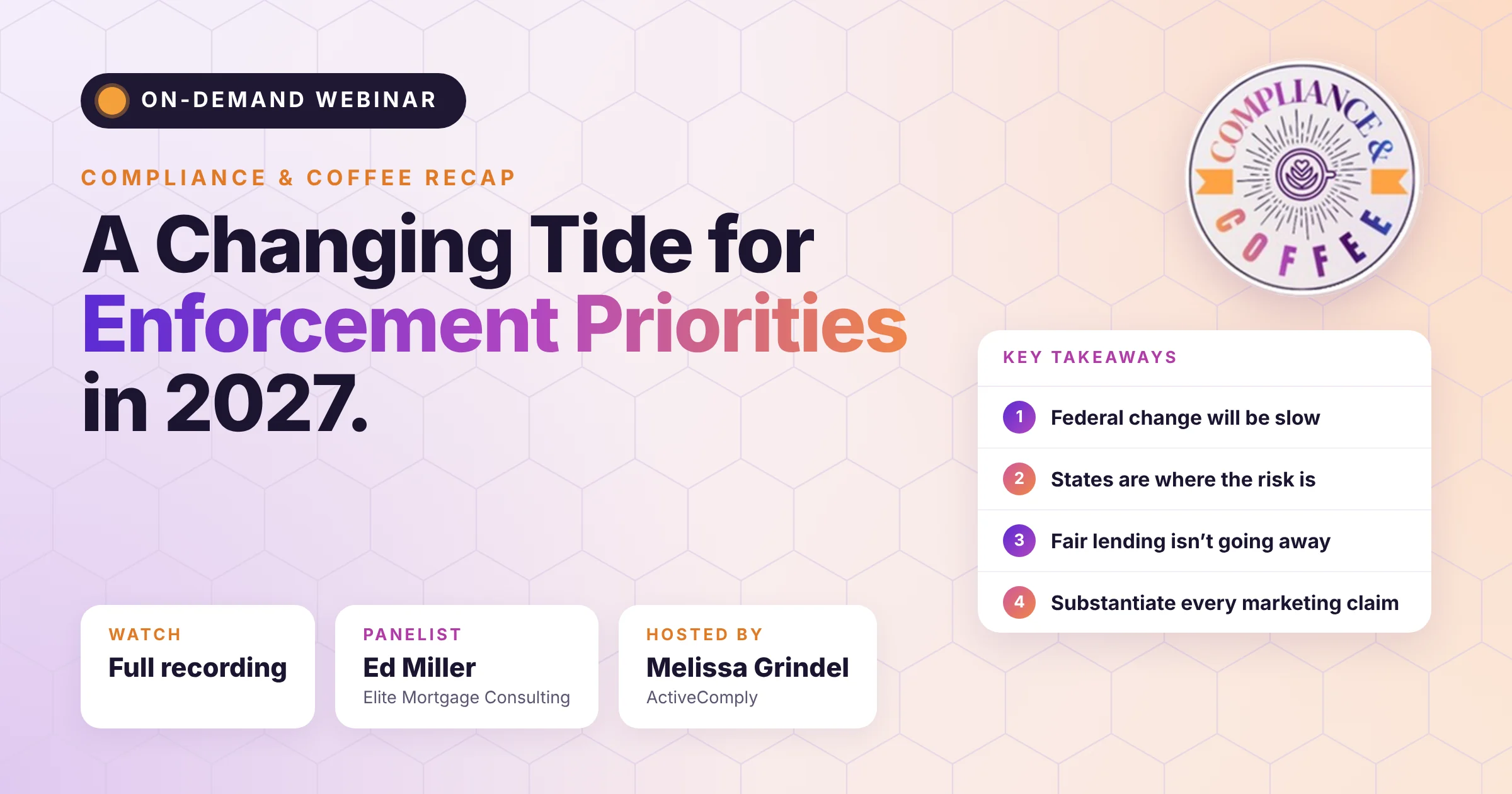
In ActiveComply’s recent Compliance & Coffee webinar, host Melissa Grindel sat down with Ed Miller, President of Elite Mortgage Consulting, to unpack what this month’s midterm election results could mean for enforcement priorities heading into 2027. Watch the recording, then read on for a summary of the key takeaways.
Why a “blue wave” doesn’t mean overnight change, and where compliance teams should focus as the states take the lead.
A Changing of the Tide?
Politics inevitably drives legislation and enforcement priorities in the mortgage industry, so compliance teams can’t afford to ignore it. The midterms shifted seats in the House, the Senate, governor’s mansions, and attorney general offices. But as Ed put it, a blanket “yes” or “no” doesn’t cover it.
- Federal: The executive branch and judiciary are unchanged, so existing executive orders, including the order on disparate impact, remain in place.
- Congress: Congress controls the purse strings. Without 60 votes in the Senate, new funding for regulatory agencies would likely move through budget reconciliation, which takes time.
- States: New governors and attorneys general are where change is likely to show up first. Pennsylvania, for example, has moved to hire former federal enforcement staff from agencies like the CFPB, FDIC, and OCC.
CFPB Agency Revival
The CFPB saw steep cutbacks in funding and staffing over the past two years. With Senator Elizabeth Warren expected to chair the Senate Banking Committee, Ed anticipates efforts to reallocate funds back to the Bureau. Even so, agency leadership appointed by the current administration remains in place, so the industry may see less new legislation and more of a tug-of-war over oversight, enforcement, and advisory guidance.
Keep the long view in mind, too. ECOA carries a five-year statute of limitations, and there are two years left in this administration. Practices today can still be examined under a future administration.
A Lesson from Trigger Leads
The trigger leads bill is a good example of housing as a bipartisan priority, but it also shows how slowly regulatory change takes effect. It moved through two different Congresses to reach the finish line, and Ed noted that it largely shifted activity from the credit reporting agencies to data aggregators. Most statutes come with a ramp-up period, then another year or two to gather data. The results of a change made today may not be felt until the next administration.
California’s Super Regulator
In May, California’s governor appointed former CFPB Director Rohit Chopra to lead the new Business and Consumer Services Agency, which brings together the DFPI, the Department of Real Estate, Consumer Affairs, and more. Six months in, financial institutions should be watching for:
- Fair Lending: AB 801, signed September 30, creates a state-level disparate impact standard and mandates a fair lending exam every four years.
- Junk Fees: Expect scrutiny of bundled “admin” fees. Consider itemizing fees on loan estimates and closing disclosures and keeping supporting invoices.
- Data Security: A recent California settlement with an IMB over a data breach signals that data protection is a priority for every institution.
Ed’s advice to IMBs: just because the burden shifts doesn’t mean you should shift. Know your data, including HMDA, fair lending results, and even time on the warehouse line.
Private Equity & Housing
Several newly elected officials have been vocal about limiting institutional investors’ purchases of single-family homes. Ed was skeptical that these limits will meaningfully improve supply, since large institutional portfolios are spread across many states and jurisdictions. For lenders in states pursuing these initiatives, such as Illinois and Texas, take a close look at how you discuss and offer down payment assistance programs, and which partners you use.
A tip from Ed: reliance on DPA isn’t a HMDA-reportable field, so document it. It will make your matched-pair analysis much easier when you need to explain why one applicant qualified and another didn’t.
FHFA & VantageScore
FHFA oversees Fannie Mae and Freddie Mac, so shifts in its direction ripple through lender requirements. Allowing VantageScore is meant to break up credit bureau costs and pass savings to borrowers. However, Ed noted that recent mortgage insurance quotes using VantageScore came back at roughly double the premium. It may simply be a market reaction to an unknown, but it’s too early to tell.
That makes this a UDAP concern for marketing. Loan officers may be eager to promote savings that haven’t been substantiated. Much like the pandemic-era rush around low rates, regulators will want to know where a claim came from and how you can support it.
Predictions for 2027
- Expect Splashy Headlines, Slow Movement: Even if the CFPB regains full funding, hiring and training mean roughly a year before meaningful action.
- States Are the Risk: States are more nimble and can diverge from one another. The “50 mini CFPBs” trend will continue.
- Always Be Re-evaluating: If you scaled back programs, consider reinstating them. Keep monitoring and testing, and adjust when initiatives aren’t delivering results.
- Document Your Reasoning: If you wind something down, have a clear, articulable business purpose behind the decision for future exams.
Conclusion
A changing tide rarely means overnight change. The lenders who stay steady, know their data, and keep a close eye on state-level activity will be best positioned for whatever 2027 brings.
Marketing Claims Under the Microscope? ActiveComply® Pre-Review Can Help.
ActiveComply® Pre-Review helps your team review marketing before it goes live, so claims are substantiated and every approval is documented and exam-ready. Stay ahead of UDAP, fair lending, and state-level scrutiny.